Pool Cage Painting Services in Gainesville, GA
Pool Cage Painting Kings provides pool cage painting, screen enclosure painting, and lanai frame refinishing services in the Gainesville, GA area for both residential and commercial properties, from single-story backyard cages to community pool enclosures. Contact us now for a free estimate.
How Much Does Pool Cage Painting Cost in Gainesville, GA?
Pool cage painting in Gainesville, GA costs anywhere from $1,340 to $3,560 on average for a standard single-story residential pool cage. The price depends on the cage size and height, how much chalking, peeling paint, and corrosion has to be treated, whether screens are masked, removed, or replaced, the coating system, and access around the pool.
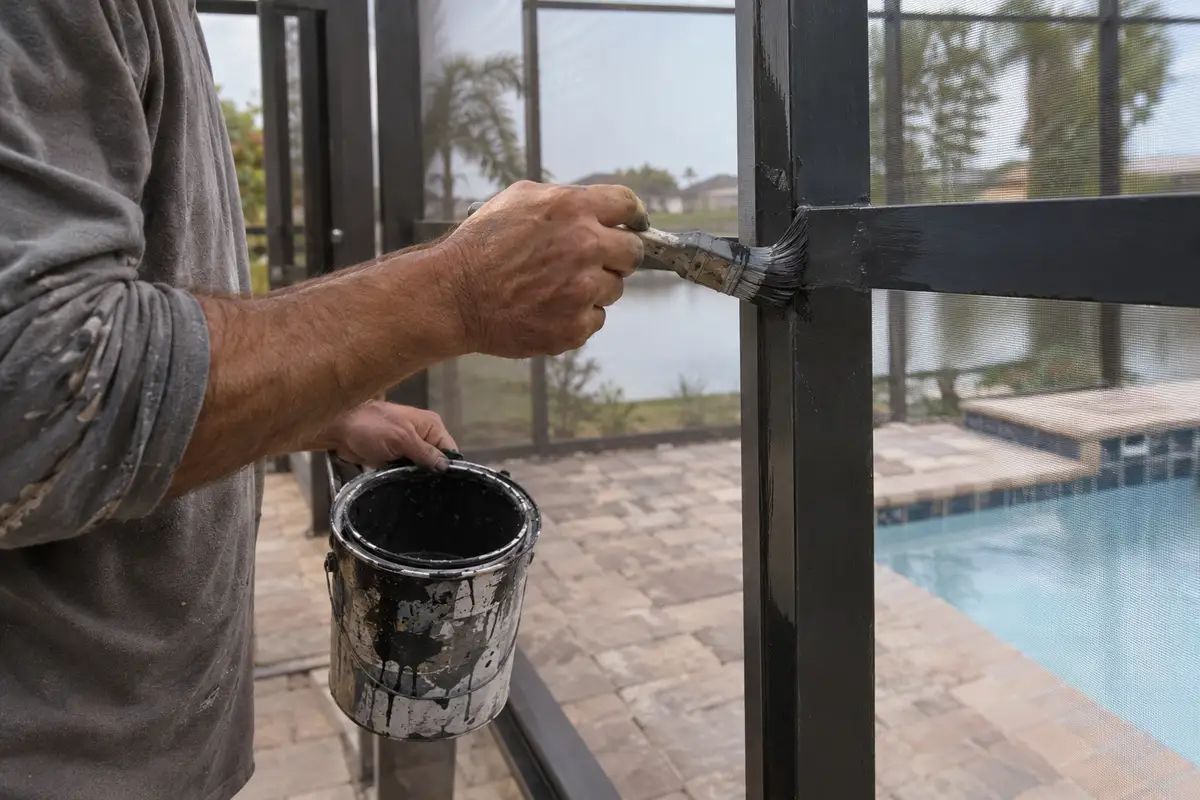
Do You Paint Pool Cages at Homes, Condos, and HOA Communities?
Yes, we paint pool cages at houses, condos, HOA common pools, apartment complexes, and hotels. Let us know the property type, roughly how big the enclosure is, and whether part of a shared pool needs to stay open during the work.
Do You Also Paint Lanai and Patio Screen Enclosures?
Yes, we paint lanai, patio, and porch screen enclosures the same way as pool cages. They're usually priced lower because there's less framing and less chlorine damage to treat.
Do You Service My Area?
Yes, we cover the Gainesville, GA area. Send us the property address and we'll confirm.
How Soon Can You Paint My Pool Cage?
We schedule around dry weather and any HOA approval you need. Fall through spring is usually the busiest stretch, so contact us early if you have a date in mind.
What Information Do You Need for a Pool Cage Painting Quote?
We need the address, photos of each side of the cage, the approximate size and height, and the current color. Tell us about any peeling paint, white chalky spots, bent beams, or torn screen.
Will I Need to Be Home While You Paint the Cage?
No, as long as we can get into the backyard and the cage door is unlocked. Secure pets indoors and let us know about gate codes before the first day.
Can I Get a Price Before the Work Begins?
Yes, we confirm the price before starting. If washing uncovers more corrosion or loose paint than the photos showed, we talk to you before doing extra work.
How Long Does It Take to Paint a Pool Cage?
Most residential cages take 2 to 5 days, including washing, prep, priming, and two coats. Two-story cages, heavy corrosion, and rain delays add time.
How Long Does Pool Cage Paint Last?
Typically 5 to 10 years. Good prep, a metal-rated coating, regular washing, and an inland location push it toward the long end.
Which Costs Less, Painting or Replacing a Pool Cage?
Painting, by a wide margin. A new cage typically runs $5,000 to $15,000 or more. Replacement only makes sense when the frame has bent members, failing joints, or widespread corrosion.
What Colors Can You Paint a Pool Cage?
We most often paint cages bronze, dark bronze, black, or white, and earth tones like beige are common too. Changing colors is fine, but check your HOA rules first.
Do I Need HOA Approval to Paint My Pool Cage?
Yes, in many communities, especially if you're changing the color. Architectural review boards often allow only bronze, dark bronze, black, white, or certain earth tones, and approval can take 2 to 4 weeks. We can give you color chips and product sheets for the request.
Do I Need a Permit to Paint a Pool Cage?
No, repainting an existing cage usually doesn't need a building permit. Structural repairs or replacing beams can, and your local building department decides.
Do You Remove the Screens Before Painting?
No, not if the screen is in good shape. We mask sound screen and paint around it. Torn screen comes out and is replaced after the paint cures.
Can You Paint the Cage and Rescreen It at the Same Time?
Yes, and booking both together usually costs less than doing them separately. We paint the frame first and the new screen goes in once the coating has cured.
Can You Paint a Two-Story Pool Cage?
Yes, we paint tall and two-story cages. They often take 30 to 50% more prep than a single-story cage, so tell us the height and how easy the backyard is to reach.
Can You Paint a Mansard, Dome, or Gable Roof Cage?
Yes, we paint mansard, dome, and gable roof cages. Taller and more complex roof styles take more time overhead and usually cost more.
Can You Paint the Screen Doors and Kick Plates?
Yes, we paint the screen doors and kick plates along with the frame.
Can You Paint a Cage With a Faded, Chalky Finish?
Yes, chalking is the most common reason people repaint. Sun, heat, and moisture break down the factory finish into a powdery layer that we wash and scuff off so the new coating can bond.
Can You Paint a Pool Cage That Has Peeling Paint?
Yes, we scrape and sand off every loose flake first, or the new coat peels with it.
Can You Paint Over the Original Factory Finish?
Yes, most cages came powder coated or factory painted, and a sound factory finish takes new paint well once it's cleaned and scuffed. Bare spots get primer first.
Can a Corroded or Rusty Pool Cage Be Saved With Paint?
Yes, in most cases. Aluminum doesn't rust, but it pits and corrodes, and the steel screws do rust. We treat surface corrosion and replace rusted fasteners, but members that are corroded through need replacing before paint.
Can You Paint a Pool Cage Near the Coast?
Yes, but salt air speeds up corrosion, so coastal cages usually need more fastener replacement and primer on pitted spots. Expect a shorter repaint cycle than an inland cage.
Can You Paint a Pool Cage After Storm Damage?
Yes, once bent beams, pulled anchors, and loose joints are repaired. Paint is a finish, not a fix, so we'll tell you if a section needs an enclosure contractor first.
Can You Paint a Pool Cage During the Rainy Season?
Yes, but summer afternoon storms limit us to dry morning hours, so jobs run longer. Fall through spring is usually the easiest time, with lower humidity and fewer delays.
Should I Move Patio Furniture and Grills Out of the Cage?
Yes, clear out furniture, grills, plants, and pool toys if you can. Anything too heavy to move, we cover with plastic and work around.
Should I Trim Bushes Away From the Cage Before You Come?
Yes, cutting plants back from the outside of the frame gives us room to wash, sand, and spray every side evenly.
Can I Use My Pool While the Cage Is Being Painted?
No, it's best to stay out of the pool during the job. Washing knocks debris into the water and we tarp the pool while spraying overhead, so plan to run the filter and skim once we finish.
Do You Pressure Wash the Cage Before Painting?
Yes, every job starts with a pressure wash and a mildew cleaner.
What Paint Do You Use on an Aluminum Pool Cage?
We use direct-to-metal acrylic or two-part urethane coatings made for aluminum, over an epoxy or etching primer on bare and pitted spots. They resist UV, humidity, and chlorine much better than house paint.
Can I Use Regular House Paint on a Pool Cage?
No, ordinary latex house paint doesn't bond well to aluminum and tends to peel early. A metal-rated coating and proper prep are what make the job last.
How Do You Apply the Paint to the Cage?
We spray it on in two thin coats, which covers the corners and channels of the frame evenly.
Will Overspray Get on My Pool, Deck, or House?
No, we mask the deck, pavers, pool equipment, and house walls and tarp the water before spraying. Any stray overspray is cleaned off before we leave.
Can I Paint My Pool Cage Myself?
Yes, but most DIY cage jobs fall short on prep. We use a pressure washer, sanders, metal primer, a sprayer, and a lot of masking to get a finish that lasts.
When Can I Put the Furniture Back and Use the Pool?
Once the final coat is dry and we've removed the tarps and masking. We'll tell you before we leave when it's fine to swim and move furniture back against the frame.
How Should I Clean the Cage After It's Painted?
Rinse it with a garden hose and mild soap now and then. Skip harsh cleaners and close-up pressure washing, which can wear the coating down faster.
